

Buying your first home can feel daunting, and it’s hard to know where to start. Lenders look at two things above all: your deposit, and your serviceability, which is how likely you are to keep up your mortgage repayments for the long haul. This article covers both, plus what you can do now to strengthen your application.
Want a rough idea of where you stand? Use our online calculator to estimate your borrowing power. For a more precise figure before you start house hunting, getting pre-approved by a lender is a great idea, and our Mortgage Advisers can help you find the best solution for your situation.
Start with a regular savings routine
Banks love to see a stable income, and spending habits that suggest you’ll comfortably pay back your mortgage every week. Showing a consistent savings habit speaks volumes to potential lenders.
KiwiSaver is a great example, because you and your employer both contribute to your account each pay. If you’re eligible for the government contributions each year, your nest egg will begin to look rather healthy.
It also helps to set up an automatic payment of any surplus after your living costs and debt repayments have been covered. Put it in a savings account, which shows the lender you’re serious about saving and helps with the urge to splurge come payday.
Your deposit: what counts and how to boost it
It might sound obvious, but the more you have put aside for your deposit, the less you’ll need to borrow. Saving a bigger deposit isn’t always easy, so it helps to know what can count towards it:
- cash you have saved up
- your KiwiSaver savings
- cash gifts, or equity from your parents’ home, for example
Using your KiwiSaver
You can apply to withdraw your KiwiSaver savings and put them towards the purchase price of your first home. You can usually take out most, but not all, of your savings. You’re eligible for a first home withdrawal if you:
- have been a KiwiSaver member for at least three years
- have not made a withdrawal from your KiwiSaver account for the purchase of a home before
- intend to live in the property
- are buying your first home (or have confirmation from Kāinga Ora that deems you equivalent to a first home buyer)
- have no current or previous invested interest in property or land
Review your KiwiSaver with one of our KiwiSaver Advisers. They can make sure you’re putting an appropriate amount into your KiwiSaver and invested in the right fund to reach your savings goals.
What LVR means, and what to do without a 20% deposit
LVR stands for Loan-to-Value Ratio: the amount a lender provides compared with the value of the property. The size of your deposit directly affects it. For example, a $100,000 deposit on a $500,000 home means borrowing $400,000, which is an LVR of 80%. Borrowers with higher LVRs are considered more risk for the lender.
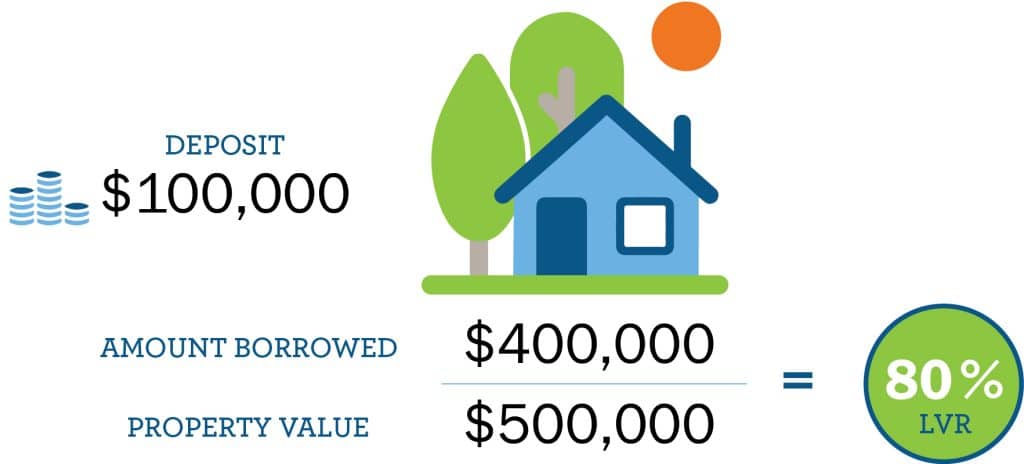
Under the current LVR restrictions, you’ll usually need a deposit of at least 20% to buy your first home as an owner-occupier. There are exceptions, which is why it’s important to talk with a Mortgage Adviser. Once they understand your circumstances, they can point you in the right direction. Options include:
- A guarantor arrangement with family. If a parent or family member is willing to guarantee part of your loan, banks often treat your application as if you already have the 20% deposit. That can mean better interest rates, no low-equity fees, and sometimes cash back offers.
- Low-deposit loans. Regulations allow banks to approve up to 25% of their home loans for people with less than a 20% deposit, but banks are selective about who gets them. Having a conditional offer accepted on a property puts you at the front of the queue, so it’s worth getting pre-approval and starting the house hunt.
- Your existing bank. If you’re already a customer, they may be more willing to work with you on a low-deposit mortgage. Your history with them can work in your favour when competing for those limited spots.
- A new build. Banks can be much more generous with lending for new builds, and you may be able to secure a mortgage with just a 10% deposit. New builds are seen as lower risk because they come with warranties and modern features that hold their value well.
Serviceability: income, expenses and debt
Serviceability is your likelihood of keeping up with your mortgage repayments long term. Your lender will check that your regular income covers not only the repayments, but also things like rates, insurance, house maintenance and any rises in interest rates.
Your disposable income
How much money is left after your living costs and debt repayments is a key thing your lender will look at. Many lenders use standardised expenses, but regular costs such as high transport costs, school or childcare fees and online subscriptions are all included in the servicing calculation and reduce your disposable income.
Lenders also look at your recent spending patterns during the application process. By identifying and fixing any recurring expenses that might raise concerns, your application will be looked upon more favourably. For example, if you have several streaming subscriptions, can you cut back to one? The higher your affordability, the higher your borrowing power.
Debts and your credit history
Paying off outstanding debts is really important in validating your financial situation. Personal loans, like a car loan, credit cards and Afterpay debts can all affect whether you get a mortgage approved, so make sure you prioritise them.
Your lender will consider your debt-to-income ratio, all your outgoings and your credit score. Even with disposable income, a challenging credit history or a high level of debt will damage your borrowing power. Not all debts are created equal, though: lenders look at the type of debt you have and how it affects your overall financial health.
If you’re planning to apply for a home loan, come up with a plan to improve your credit score and tackle debt head-on. One of our Mortgage Advisers can help you put strategies in place so your situation looks more appealing to the lender.
Your credit card limit
Credit card debt isn’t necessarily bad if you pay it off on time. What you may not know is that even if you pay it off each month, or rarely use the card, your credit card limit can still affect your borrowing power.
The available limit is counted against your disposable income. If you have a $10,000 limit with nothing owing on it, your mortgage borrowing potential may still drop by thousands of dollars. To maximise your borrowing power, choose a low credit card limit if you can, or close the account altogether if you aren’t using it.
Budgeting for homeownership
The costs don’t stop at the purchase price. Get out a piece of paper and write down the following (your Mortgage Adviser can help with this):
Regular ongoing costs
- Council rates. You’ll find these on the city and regional council websites. They’re often tied to the registered property value (RV), so a more expensive property usually means higher rates.
- Bank fees and mortgage repayments.
- Insurance. Both your personal or life insurance and insuring your home. Contact our Insurance Advisers for a review at no cost to you.
- Body corporate fees, if any. These aren’t always applicable, but if they are, the agent should provide them on behalf of the body corporate committee.
- Repairs and maintenance. Beyond anything major, a rough budget of $2,000 per year for property maintenance is a good base to start with.
- Rental income and property management fees, if you’re renting the property out.
One-off costs
- Renovation costs, if you have ambitions for a doer-upper
- Setting up your buying entity, for example a company or family trust
- Building report
- Lawyer’s fees
- Property valuer’s fees
- Moving costs, such as house movers, school fees and change of uniforms
- Utilities, such as disconnecting and reconnecting your internet and phone
You don’t have to figure this out alone
At CM Financial Advisers, our KiwiSaver team can help you understand your options and choose the best fund for your goals. We can also check whether you qualify for a KiwiSaver withdrawal to buy your first home.
Our expert Mortgage Advisers can help you secure a mortgage for your first home and find out how much you can borrow. Their service is usually free because they’re paid by the lender. They’ll guide you through the process, making it much smoother with their knowledge and experience.
Ready to get started? Talk to us today! It’s a no-obligation chat, and it’ll get your journey to home ownership underway.